In this post, we’ll dive into five personas you’ll frequently engage with as a Customer Success Manager. Note that this is not an exhaustive list – organizations are complicated and involve nuances found beyond that of an org chart, but this is a start to mapping out your customer landscape.
We’ll talk about power with 2 buyer roles: the economic buyer (i.e. who is purchasing your solution) and the technical buyer (i.e. who is actually signing off on the contract). And don’t forget a CSM’s best friend (the champion), stakeholders we need to impress (the influencers), and a person we need to win over (the skeptic).
The Economic Buyer
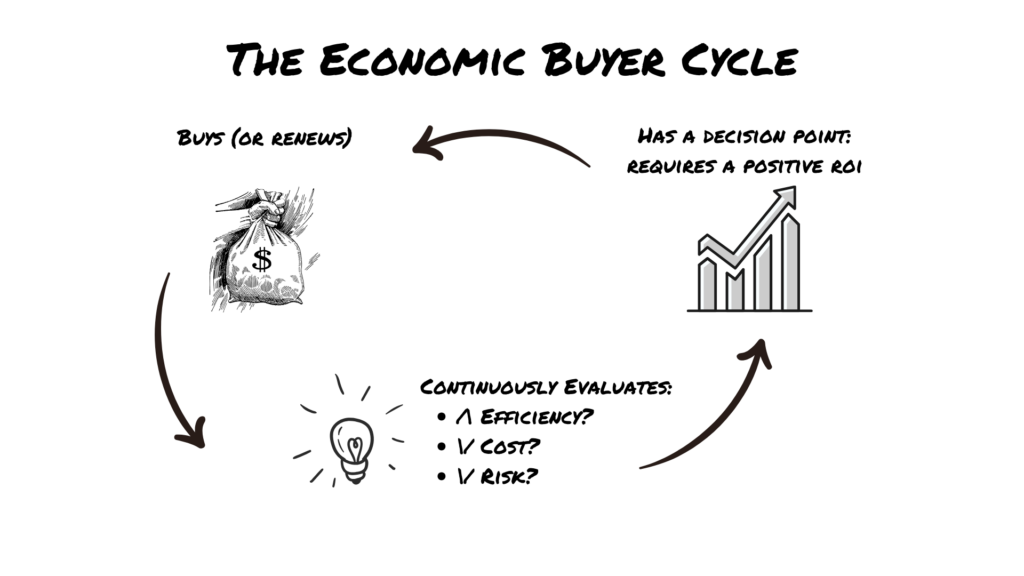
The economic buyer is ultimately who is purchasing our product. While they may still have to get approval and sign-off from someone who oversees budget, they are the reason for the deal in the first place.
This person should be our primary target as CSMs for QBRs. Customer goals created and drafted as part of our ongoing success plan should be ultimately determined by this individual. We can track and measure progress, report, and make any adjustments accordingly.
When entering the renewal phase, we should take a look back onto these goals and provide quantifiable results with success stories. (For more on that topic, read our post: Creating Renewal Rocket Fuel from Success Stories.) But since you’ve created a great relationship with your economic buyer/power by holding QBRs and tracking progress along the way, success stories shouldn’t really have any new or surprising information.
The Technical Buyer
Simply put, the technical buyer is the person who signs on the dotted lines of your contract. If the economic buyer not only controls budget but has full approval to spend, this person could be one and the same.
In larger organizations, the technical buyer could be someone within a procurement office, or IT if you’re selling SaaS to an outside business unit. In the latter case, your team may have to answer questions around security and technical requirements to get final approval.
If your technical buyer holds power and is one or more levels above your economic buyer, such as an executive, this person will be crucial to maintain a relationship with moving forward, either directly or indirectly through your economic buyer.
Executive Business Reviews (EBR) can be held on an annual or bi-annual basis. These should be directed toward your executive sponsor, who in this case is your technical buyer. This way you can keep them up to date on all the great things being accomplished by their team using your software.
The Champion
The Champion AKA a CSM’s advocate, customer product expert, and best friend.
Any account should have at least one champion: a user that sees the value in your product, has achieved quantifiable wins in the process, and advocates on your behalf to others within their organization.
If you’re lucky enough to have a sticky product with a substantial market share, a champion at one organization will take your product with them when they take on a new role. This creates an easy deal for your sales team, but more importantly, you’ll be able to expand quickly within the account and multiply champions.
But how do you create a champion?
(We’ll talk about this in detail with a future blog post, but for now:)
Here’s the simple answer.
- Identify a user with substantial pain
- Help them to solve their problem with your product
- Stack wins – qualify and quantify
By following these 3 steps, we naturally help our customer become an expert in not only using our product, but using our product to solve business challenges specific to their organization. In other words, we’ve elevated our customer to become an agent of positive change.
The Influencers
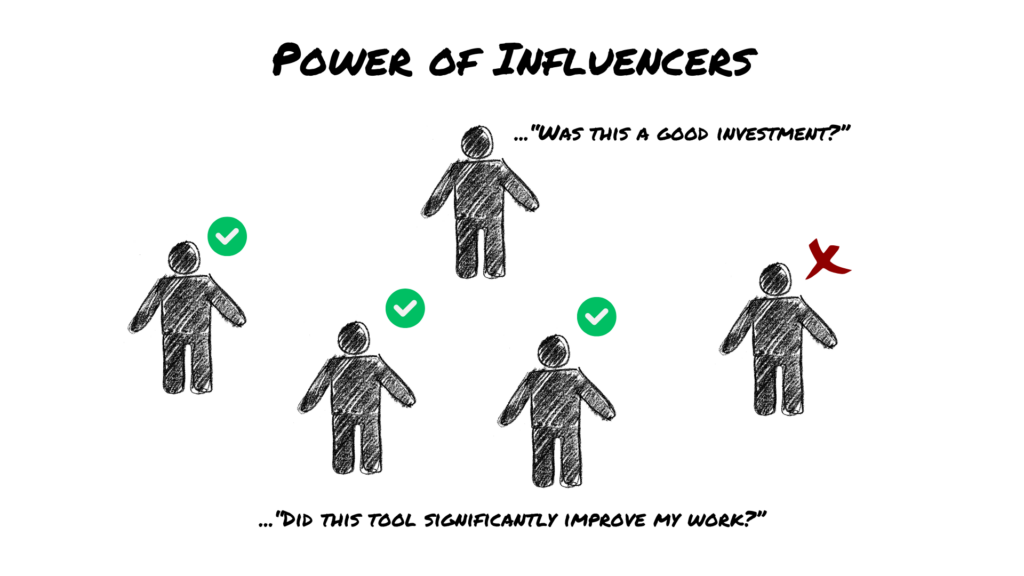
An influencer is someone with the the ability to influence opinions and purchasing decisions of our buyer roles. They may or may not be physical users of the product.
Our primary goal should be to identify our influencers and build a relationship with them. If they are not users of the product, they could be managing people with access or simply be an interested party.
This is especially important when our buyers aren’t active users but are people managers of users. Every real user is going to have an opinion based on a variety of factors including but not limited to their product experience, customer service, and ability to accomplish their goals by interfacing with the product or service you provide. For the purposes of renewals, upsells, and gauging overall value return, a buyer will almost always consult with these individuals first.
The Skeptic
The skeptic will create numerous challenges for you – but know that if you win them over, they will become a tremendous advocate (and maybe even a champion).
This is generally a person that has been using a legacy tool or process, and now you are introducing something new. Change management is an essential part of any CSM skillset and you will have to manage this before it becomes a substantial detraction from your onboarding/implementation.
While it’s not always possible to win a skeptic over completely, it is very possible (after all, your solution was purchased for a reason). When working with skeptics, focus on the pain they’re having with the current solution. They may not be able to admit or even acknowledge that it’s there, especially if its a process that’s been baked into their role for an extended period of time, but you can help explore challenges and potential solutions.
You’ll notice that both developing champions and winning over skeptics are from the same playbook: identify pain, solve, stack wins.
Regardless of buying power or a power user, you should always put the customer first – evaluate from their perspective – and make a sizable difference to return immense value for every person, which in turn rolls up to renewal and upsell decisions.
